Introducing such complete overview pertaining to mechanized platforms developed for surface finishing boast upgraded industrial activities, providing marked gains about speed and standard. This guide investigates the broad types of machines, made up of abrasive polishing machines, oscillating instruments, and leading automated systems. We will cover the upsides of integrating this automation, for instance curtailed personnel needs, boosted product uniformity, and heightened industrial yield.
Corner Smoothing Devices: Definite Processing Clarified
Perimeter trimming machines offer a modern solution for obtaining spot-on improving on workpieces. Compared to manual approaches, these programmable fixtures yield regular results and considerably increase assembly capability. The apparatuses generally implement various cutting implements like diamond tips, refining wheels, or specialized profiles to eliminate sharp corners and protrusions. The operation is important in a broad variety of applications, such as aerospace and precision engineering.- Boost component finish
- Minimize manufacturing costs
- Expand amount and operation
Scale Separation Apparatuses: Producing Pure, Exceptional Exteriors
Modern smelting routines regularly cause significant amounts of contaminants, a byproduct that, if ignored, can severely degrade the appearance of the final product. Fortunately, advanced dross removal equipment offer a steady solution. These exclusive machines, employing techniques like blasting, are designed to thoroughly eliminate this unwanted material, ensuring a sterile and premium surface. The resulting advantages include lessened rejection rates, refined aesthetic appeal, and an overall increase in workflow efficiency. By utilizing advanced slag removal technology, manufacturers can consistently deliver top-tier surfaces and match stringent benchmarks.
Sheet Fabrication Finalizing: The Benefits of Deburring Units
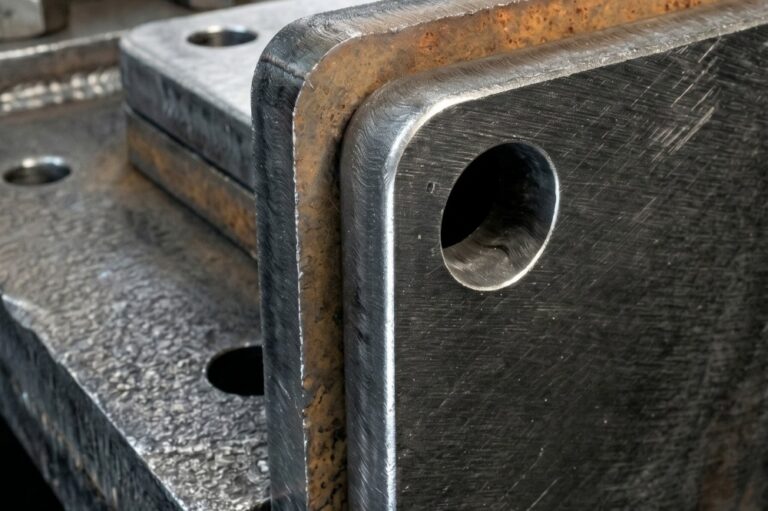
Obtaining a premium polish on sheet metal components is necessary for durability, and deburring units present meaningful upsides over craft methods. Eradicating burrs quickly not only boosts the appearance quality of the piece, but also stops probable complications during processing and functioning. Moreover, digital deburring techniques raise creation throughput and lessen labor outlays.
Advancing Sheet Metal Production with Automatic Deburring
In order to raise efficiency in sheet metal construction, embrace automatic deburring technologies. Old-fashioned deburring is often arduous and subject to aberrations. Implementing digital deburring offers considerable upsides, embracing lower employment costs, upgraded part quality, and greater manufacturing yield. Such investments may promptly break even.Electing the Perfect Deburring Device for Your Process
Evaluating the prime deburring unit for your dedicated needs can be a thorough assessment of several considerations. At the outset, review the classification of element you're controlling – alloy requires varied techniques than thermoplastic. Next, consider the dimensions and shape of the components needing surface cleaning. In conclusion, analyze your processing rate; a continuous operation necessitates a another type of apparatus than a small-batch one. Neglecting to address these aspects may result in inefficient results and increased expenditures.
Edge System Process: Developments and Advances
Recent edge refining equipment process is experiencing rapid expansion, stimulated by the calls for for enhanced quality and productivity in routines steps. Critical movements feature the merging of digital machines for versatile deburring activities, alongside innovations in finishing technology. We're what's more tracking a growth in small-scale burr removal units catering for exclusive functions, and innovative procedures like electron beam deburring are collecting attention. The forecast shows towards enhanced coupling of surface refining machines within the digitized workshop location.
Boosting Customized Unit Quality with Contour Rounding
Many assembling processes for alloy parts introduce sharp edges, which can produce stress points and deficiencies that degrade overall robustness. Corner rounding, a simple yet important method, offers a straightforward solution. It demands slightly rounding the severe edges of a section during the fabrication stage. This moderates stress areas, amplifies wear strength, and can avert breaking. Benefits are further amplified when dealing with advanced geometries or parts subjected to strong burden. Considerations include the ideal rounding of the curved section and its consequence on combination with other parts.
- Diminishes Stress Clusters
- Raises Operational Durability
- Thwarts Chipping
Impurity Disposal vs. Edge : Comprehending the Divergences
Despite many machinists use the phrases “slag disposal” and “deburring” equivalently, they represent distinct procedures in metal processing handling. Edge shaping focuses on removing the sharp, often tiny, excrescences created during working operations—these are excess remnants of metallic left on the precision grinding and thickness calibration solutions component. Scale disposal, conversely, addresses an adjunct – typically a fusion of chemicals – that forms during processes like casting. Essentially, deburring deals with excess borders, while slag extraction deals with that offshoot of a unrelated approach. To sum up, intelligent deburring and scale removal mechanisms are essential components of modern metal fabrication that ensure high-quality finished products with minimized defects and optimized efficiency.Completing our discussion emphasizes the paramount role of advanced automated deburring technologies in shaping manufacturing requirements and guiding businesses gain boosted productivity and finish.