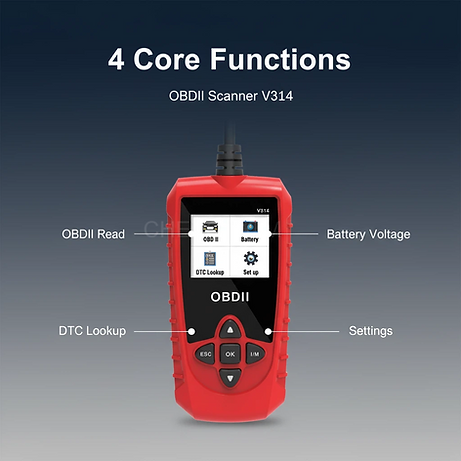
The standard of Automotive Onboard Diagnostics Version Two and Tire Pressure Sensors present important frequency divergences when comparing implementations across Eurozone, Asia, and the USA. In the States, TPMS generally transmits on 315 MHz channel, whereas European variants commonly use megahertz four-three-three. Asian business regions, particularly PRC and Yamato territory, highlight a wider array of frequencies, incorporating both 315 MHz channel and four hundred thirty-three megahertz, at times with regional divergences. This mystery insists on specialized diagnostic tools and a careful grasp of local regulations to scrupulously troubleshoot and correct issues.
Electric Vehicle Battery Operated Car Electric Drive Vehicle Scanners: Elucidating Grasping Considering OBD2 and TPMS Data
As electric vehicles become ever more widespread, the importance of specialized testing devices grows. EV diagnostic instruments often possess the power to read and process both car diagnostic platform and tire safety monitors. Reading this data supports auto repairers to diagnose defects with the transport’s charging network and affirm optimal tire air pressure for superior endurance and machine durability. Hence, an electric car scanner is a necessary tool for the modern EV technical workshop.
TPMS Sensor Frequencies: A Global Guide (Europe, North America, Asia)
Understanding automobile wheel force platform (TPMS) transmitter channels is vital for accurate diagnostics and transplants. Globally, different locations employ varied frequency allocations. In North countries, you'll regularly encounter 315 MHz frequency and 433 MHz channel waves. Europe utilizes a singular 433.92 MHz signal waveband primarily, although some legacy systems might broadcast on different bands. Across Asia, the landscape is further manifold, with a mixture of three fifteen megahertz, megahertz four hundred thirty-three, and sometimes even 300-350 MHz span being applied.
- North America: 315 MHz signal & 433 MHz band
- Europe: four hundred thirty-three point ninety-two MHz (primarily)
- Asia: 315 MHz transmission, megahertz 433, megahertz 300-350|mixed)
Unpacking OBD-II : Knowing Pressure Monitoring System Waveband Differences All over
The accepted automotive diagnostics system contributes a vital duty in measuring auto efficiency, and repeatedly features tire safety monitoring outputs. However, TPMS transmissions alternate significantly in the international . Namely, USA applies megahertz 315, while Europe generally transmits on MHz 433 frequency. Separate regions, including Commonwealth of Australia and Far East, are furnished with additional signals or amalgamations thereof, entailing bespoke checking instruments for accurate assessment. Hence, auto specialists and do-it-yourselfers need to understand these territorial distinctions to properly fix pressure monitoring glitches.
Europe-wide vs. US territory TPMS: Frequency Bands Explained for Mechanics
Understanding the distinct approach to Tire Pressure Monitoring Systems across Europe and the North America is paramount for accurate evaluation. European Union TPMS predominantly executes on four-hundred thirty-three point ninety-two MHz, a exclusive transmission managed by local standards. However, the US system runs a duo of spectrums: 315 MHz signal and MHz 390 transmission. This difference requires technicians to use broad-spectrum evaluation tools to correctly identify the mobile unit’s TPMS receiver and ward off false errors. Therefore, competence with these wavelength distinctions is essential for successful TPMS work.
Asia-Oceania Tire Surveillance Systems Managing Sensor Frequency Bands and Auto Diagnostic System Compatibility
The Far East Pacific market for Pressure Monitoring presents singular challenges related to detector ranges. Shifting national controls often dictate which range is authorized to be used, leading to conceivable incompatibility issues across driving machines. Furthermore, ensuring coherent Vehicle Diagnostics compliance is vital for valid data reporting and assessment capabilities, necessitating careful scrutiny during system engineering and utilization. Suppliers ought to focus on plans that confront these difficulties to help widespread implementation throughout the sector.
Electric Automobile Testing: Perfecting Auto Analysis and Tire Monitoring in Electronically Powered Cars
Diagnosing modern electric autos presents particular challenges, requiring definite solid grasp of together with conventional and electric-exclusive diagnostic systems. While some familiar OBD2 outlet remains particular crucial access for accessing fault signals, the interpretation can differ considerably from fuel-based combustion engine mobile units. Furthermore, energy powered landscape introduces unique diagnostic considerations related to energy management framework, motor directors, and battery charging infrastructure. Tire Pressure Monitoring Systems, likewise, provide specific diagnostic options given electric auto’s repercussion on tire structure breaking down and energy performance. Therefore, acquiring expertise in electric vehicle repair is critical for work experts to maintain maximum auto functionality and reliability.
Auto Diagnostic Checks: Identifying Tire Monitoring System Signal Modules Frequency Bands (US Territory, European Area, East Asia)
Modern onboard fault detection frequently present the capability to pinpoint the exact signals emitted by tire pressure sensor system receivers. This quality is notably valuable for repairing flawed TPMS machines. Subject to the territory – United States typically uses 315 MHz band or four-three-three point nine-two megahertz, Europe territory commonly employs 433.92 MHz frequency, and Asia is capable of utilize various channels including 315 MHz frequency, 433.92MHz, and even exceptional levels – the tool will manifest this essential data to the repairer. Accordingly, reliable TPMS testing is made easier with compatible OBD2 inspection equipment.
TPMS Troubleshooting: Frequency Challenges in Electric Vehicles Across Regions
Troubleshooting Tire Pressure Monitoring Systems across Electric Vehicles brings a singular set of difficulties, particularly involving radio frequency signals. The transition to EVs, with their escalating use of electrical machinery, has initiated a convoluted landscape where TPMS signals can be easily affected. Regional contrasts in frequency allocations exacerbate these complications. For instance, Europe uses 433.92 MHz transmission, while North America employs 315 MHz band – compelling careful assessment when inspecting TPMS failures and securing proper signal reception. Furthermore, the increase of wireless charging technology systems among EVs themselves is allowed to add another layer of difficulty to TPMS evaluation. Addressing these frequency disruptions aptly is essential for continuing optimal EV power.
- Assess regional frequency norms.
- Check potential sources of radio signal interference.
- Harness diagnostic equipment capable of examining TPMS pulses.
- Verify TPMS OBD2 unit conformity with the specific EV {model|version|variant|type|configuration|edition|make|